


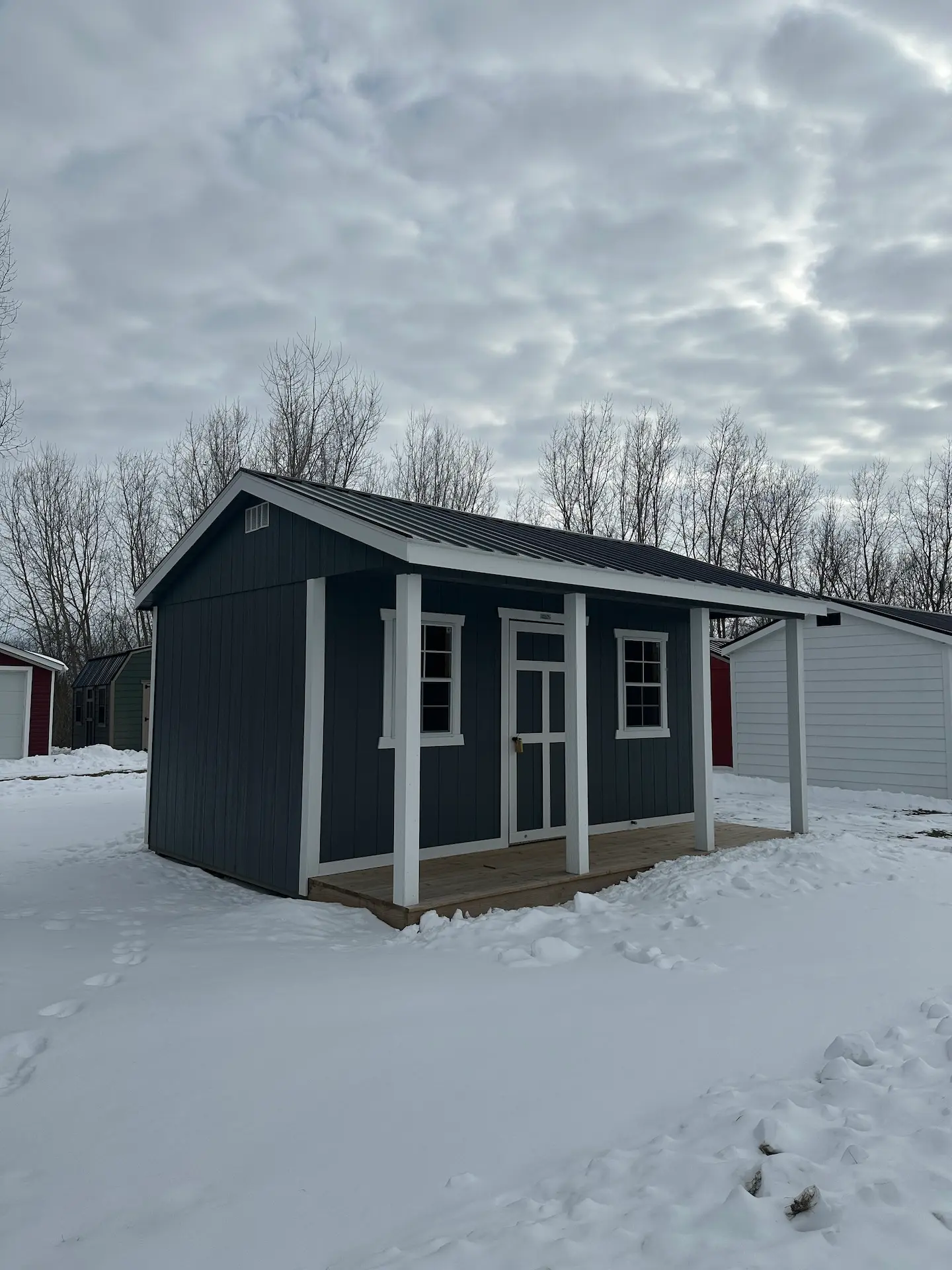
Essential Shed Accessories for Winter Readiness
November 9, 2026
November 9, 2026
Ohio winters can make a backyard shed less convenient to use. Cold temperatures, shorter daylight hours, snow, and ice can all affect how easily you access your building and what you can comfortably do inside.
But your shed doesn't have to sit unused until spring. With a few practical upgrades and some planning, you can make it a more functional space throughout the colder months.
Whether you use your shed for equipment storage, weekend projects, or hobbies, here are some ways to make it work better during winter.
If you spend time working inside your shed, insulation is one upgrade worth considering. An uninsulated building can become uncomfortable quickly when outdoor temperatures drop, especially if you're using it as a workshop or hobby space.
Insulation helps slow heat transfer through the building, which can make indoor temperatures easier to manage when paired with an appropriate heating system.
NuHaus offers R-13 floor and wall insulation options for storage sheds. Floor insulation can be particularly helpful for raised buildings, while wall insulation helps reduce heat transfer through the sides of the structure.
Insulation alone won't keep your shed warm or prevent stored items from freezing, but it can be part of creating a more comfortable space.
If you're planning a shed for year-round use, explore our insulated sheds(add link once page is built) to learn more about available options.
During winter, daylight hours are limited. If you need to grab equipment before work or spend time on projects in the evening, proper lighting can make a noticeable difference.
Windows can provide natural light during the day, making the interior easier to navigate without relying entirely on artificial lighting.
For early mornings and evenings, battery-powered or rechargeable LED lights can be useful in sheds without electricity. If you use your shed regularly as a workspace, professionally installed electrical lighting may be a better long-term solution.
Think about where you need light most. A workbench may benefit from focused task lighting, while overhead lighting can make it easier to move around and locate equipment.
When planning a new building, consider how the placement of shed windows and doors can affect natural light and accessibility throughout the year.
Even a well-designed shed becomes less useful if snow and ice make it difficult to reach.
Before winter arrives, take a look at the path leading to your shed. Make sure there's enough room to clear snow and move equipment between the building and your driveway or yard.
If you regularly use a snowblower, a ramp can make moving it in and out of your shed more convenient. Just remember that ramps and walkways need regular snow and ice removal to maintain safe access.
It's also worth checking that your shed doors open and close properly before freezing temperatures arrive. Addressing minor issues early can help prevent frustrating problems when you need to get inside during winter.
Routine upkeep is important in every season. Our shed maintenance tips cover additional ways to care for your building.
Not every shed needs the same winter setup. A building used primarily for storing lawn equipment has different needs than one used for woodworking, repairs, or other projects.
If your shed is mainly for storage, focus on keeping winter equipment accessible and protecting belongings from unnecessary exposure to moisture.
If you plan to work inside, think about how much space you'll need to move comfortably while wearing heavier clothing. You'll also want enough room for your tools, work surfaces, and any equipment you use regularly.
For hobby spaces or workshops, lighting, insulation, and ventilation may be more important than additional storage capacity.
The goal is to choose features that support how you actually use the building rather than adding upgrades you may not need.
Winter conditions can bring snow, slush, and moisture into your shed, especially when you're moving equipment in and out.
Durable flooring can make everyday use easier. Rubber flooring, for example, can provide added traction and help protect the floor from wear in workshops and other frequently used spaces. However, it still needs to be kept clean and dry to reduce slipping hazards.
If you plan to spend extended periods inside your shed, you may also want to consider heating. Any heating equipment should be appropriate for the building and installed and operated according to applicable safety requirements.
Keep in mind that insulation and heating serve different purposes. Insulation helps reduce heat transfer, while a suitable heating system provides warmth.
When comparing new shed designs, take a look at the available optional shed features to see which upgrades might fit your needs.
Winter is a good time to think about whether your shed is meeting your needs. If you regularly avoid using the building because it's too dark, difficult to access, or uncomfortable, a few thoughtful changes could make a difference.
You don't necessarily need every available upgrade. The right combination depends on whether you're storing equipment, working on projects, or creating a dedicated space for hobbies.
NuHaus builds customizable storage sheds for Ohio homeowners, with options that can help you create a building suited to your property and how you plan to use it.
Explore our storage sheds and find a design that works for winter and every season that follows.